Your car’s suspension does more than make your journey comfortable. It helps keep the tyres in contact with the road, supports vehicle stability and contributes to predictable handling when you steer, brake or travel over uneven surfaces.
When a suspension component becomes damaged or fails, your vehicle may become difficult to control. A problem that starts with an unusual noise or an uncomfortable ride can sometimes develop into a safety issue that requires immediate attention.
For Calgary drivers, potholes, rough road surfaces, everyday wear and accidental impacts can all contribute to suspension problems. Knowing the warning signs can help you recognise when a vehicle needs professional inspection rather than continuing to drive it.
In this guide, we explain the common signs of suspension failure, what to do if you notice them on the road and when arranging a tow truck is the safer choice.
Why Your Car’s Suspension Matters
Your suspension system includes components such as springs, shock absorbers or struts, control arms, ball joints, bushings and other parts that support the vehicle and manage movement between the wheels and body.
These components work together to help your car remain stable over uneven surfaces and during changes in direction.
When something goes wrong, the effects may extend beyond ride comfort. Depending on the fault, suspension damage can affect steering response, tyre wear, vehicle stability and the way the car behaves under braking.
Not every suspension noise indicates a serious failure. However, visible damage, significant changes in handling or a vehicle sitting unevenly deserve attention.
If the vehicle feels unsafe or a component appears broken, do not continue driving simply to reach your usual garage. Arrange an appropriate inspection or towing service instead.
1. Your Car Sits Lower on One Side
One of the clearest warning signs is a vehicle that appears lower on one side or at one corner than usual.
This may indicate a damaged spring, a problem with an air suspension system or another fault affecting the vehicle’s height. Uneven ground and normal vehicle design can sometimes make the difference difficult to judge, so compare the car on a reasonably level surface when it is safe to do so.
Look for:
- One corner sitting noticeably lower than the others.
- A wheel appearing unusually close to the wheel arch.
- A sudden change in the vehicle’s normal ride height.
- A tyre rubbing against the wheel arch.
- A visible broken or displaced suspension component.
If the vehicle suddenly drops at one corner, or a tyre is rubbing against the body, avoid driving it. Further movement may damage the tyre or other components.
A vehicle with a damaged spring or suspension part may need to be transported to a repair facility using suitable towing equipment.
2. You Hear Clunking, Knocking or Grinding Sounds
Suspension components move whenever the wheels travel over bumps, dips and uneven surfaces. Worn or damaged parts may produce unusual sounds during this movement.
You might notice a clunk when passing over a road joint, a knocking sound when turning or a grinding noise near one of the wheels.
Possible causes include worn bushings, damaged ball joints, loose components, broken springs or problems with the struts and other suspension parts.
Pay attention to when the noise occurs:
- Over bumps: The sound may be related to suspension movement or a loose component.
- When turning: Steering or suspension joints may require inspection.
- When braking: The cause could involve the brakes, suspension or another component.
- Along with a change in handling: The vehicle should be assessed promptly.
Sound alone cannot identify the exact fault. Brakes, wheel bearings and other parts can produce similar symptoms.
If the noise is sudden, severe or accompanied by unstable handling, stop somewhere safe and arrange professional assistance. Do not crawl beneath a vehicle parked on the roadside to investigate the source.
3. Your Steering Suddenly Feels Different
A healthy suspension and steering system should allow you to maintain control without unexpected pulling, excessive looseness or unusual movement.
If the car begins wandering, pulling to one side or responding differently when you turn the steering wheel, there may be a problem that requires attention.
Possible causes include damaged suspension components, steering faults, tyre problems or incorrect wheel alignment. The symptoms can overlap, so it is important not to assume that every steering problem comes from the suspension.
Take these changes seriously:
- The steering wheel suddenly feels loose.
- The vehicle pulls strongly to one side.
- You struggle to keep the car travelling straight.
- The wheels appear to point in different directions.
- Steering changes are accompanied by clunking or grinding.
If you cannot confidently control the vehicle, stop in a safe place and arrange a tow. Continuing to drive with a potentially damaged steering or suspension component can put you and other road users at risk.
4. Your Car Bounces More Than Usual
Shock absorbers and struts help control the movement of the vehicle’s springs. When these components deteriorate, the car may continue bouncing after passing over a bump.
You might also notice excessive body movement when braking, cornering or travelling across uneven roads.
Other warning signs include:
- A ride that has become noticeably less stable.
- Excessive body movement during turns.
- Reduced confidence when travelling over bumps.
- Uneven tyre wear.
- Fluid leaking from a shock absorber or strut.
A worn shock absorber does not always mean the vehicle must be towed immediately. The urgency depends on the severity of the fault and whether the car remains safe to control.
However, if the vehicle is bouncing excessively, feels unstable or has other serious symptoms, avoid driving it until a qualified mechanic has assessed the problem.
5. A Broken Suspension Spring Damages a Tyre
Suspension springs support the vehicle’s weight and help maintain the correct ride height. If a spring breaks or becomes displaced, part of it may sit close to the tyre or other components.
This can create a dangerous situation if the damaged part rubs against the tyre during movement.
Watch for:
- A sudden change in ride height.
- Metallic noises near a wheel.
- Visible broken metal around the suspension.
- Fresh damage or cuts on the tyre sidewall.
- A wheel that appears unusually positioned within its arch.
Do not attempt to push a damaged spring back into position or drive the vehicle to see whether the problem improves.
If the tyre has been damaged or a suspension component is broken, the vehicle should be assessed before it is moved. A tow operator can help determine an appropriate way to transport it without causing additional damage.
6. Calgary Potholes Can Contribute to Suspension Damage
A severe impact with a pothole can affect more than your tyres and wheels. Depending on the force and angle of the impact, it may also damage a wheel bearing, steering component, suspension joint or other part of the vehicle.
The risk is not limited to large potholes. A vehicle may also be affected by repeated impacts over time, particularly if some components are already worn.
After a significant impact, pay attention to:
- New knocking or rattling sounds.
- A steering wheel that no longer sits straight.
- The vehicle pulling to one side.
- New vibrations or unusual wheel movement.
- A tyre losing pressure or developing visible damage.
- A sudden change in ride height.
If the impact causes severe symptoms, do not assume the car is safe simply because the engine still runs.
For related advice, read ARM Towing’s guide to what to do after pothole damage to your tyres or wheels in Calgary. If you suspect serious suspension or steering damage, arrange an inspection rather than continuing to drive.
7. Uneven Tyre Wear May Point to a Suspension Problem
Tyres can reveal useful clues about the condition of your vehicle.
If one tyre wears much faster than the others, or the tread appears significantly different across its width, the cause may involve wheel alignment, tyre pressure, suspension wear or another mechanical issue.
Uneven tyre wear does not automatically mean a suspension component has failed. However, it is worth investigating, particularly if you also notice steering problems, knocking noises or a change in ride quality.
Check for:
- Excessive wear on one edge of a tyre.
- Different wear patterns across the same axle.
- Repeated alignment problems.
- Visible tyre damage following an impact.
- New handling changes occurring alongside tyre wear.
If the tyre is damaged or the wheel appears unstable, avoid driving until the vehicle has been assessed. A mechanic can inspect the tyres, steering and suspension to identify the cause and recommend the appropriate repair.
8. What to Do If Your Suspension Fails While Driving in Calgary
Discovering a possible suspension failure while driving can be stressful, especially in heavy traffic or on a busy road.
Your first priority is to maintain control and get yourself and your passengers to a safe location.
Step 1: Reduce speed smoothly
If the vehicle remains controllable, ease off the accelerator and avoid sudden steering movements or harsh braking where possible.
Do not accelerate to reach a garage quickly. A damaged suspension or steering component may worsen under additional stress.
Step 2: Find a safe place to stop
Move away from moving traffic if you can do so safely. Avoid stopping in a live traffic lane unless there is no safer option.
If the vehicle becomes difficult to steer or control, prioritise stopping safely rather than trying to reach a particular destination.
Step 3: Switch on your hazard lights
Use your hazard lights to alert other road users when appropriate. Stay aware of surrounding traffic and avoid standing near moving vehicles.
If you are on a busy road, do not inspect the suspension from the traffic side of the car.
Step 4: Assess the visible symptoms without taking risks
From a safe position, check for obvious problems such as a collapsed corner, a damaged tyre or a wheel that appears displaced.
Do not crawl beneath the vehicle, touch hot components or attempt roadside repairs to a broken suspension.
Step 5: Arrange professional assistance
Explain the symptoms to the towing operator, including whether the car sits unevenly, whether a wheel appears damaged and whether the steering is affected.
This information helps the operator assess the vehicle and determine what equipment may be needed.
If you are unsure whether the vehicle is safe to move, err on the side of caution and arrange professional assistance.
9. When Should You Call a Tow Truck Instead of Driving to a Garage?
The right decision depends on the severity of the problem, but some warning signs indicate that driving should stop.
| Warning sign | Recommended action |
|---|---|
| Vehicle suddenly sits much lower on one side | Stop driving and arrange an assessment |
| Broken spring or visibly displaced suspension component | Do not drive; arrange suitable towing |
| Tyre rubbing against the wheel arch | Stop and seek professional assistance |
| Steering becomes difficult or unpredictable | Pull over safely and arrange a tow |
| Severe knocking combined with unstable handling | Avoid further driving |
| Mild, gradual deterioration without severe symptoms | Arrange a prompt inspection and follow professional advice about safe transport |
This table is general guidance, not a diagnosis. A vehicle can have serious hidden damage even if the exterior looks normal.
The key question is whether the vehicle can be controlled safely and whether moving it could worsen the damage.
If there is a possibility that a wheel, steering joint or suspension component could detach or fail, do not drive it to the repair shop.
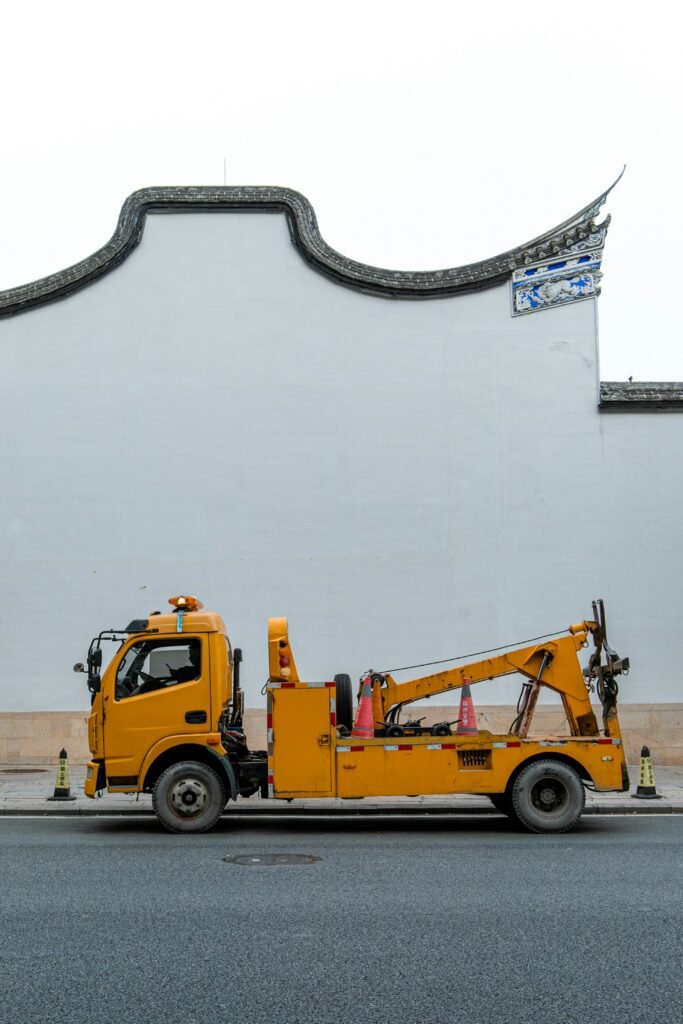
For vehicles that cannot safely travel under their own power, visit ARM Towing to learn about towing services in Calgary and discuss your vehicle’s condition.
10. Why the Right Towing Method Matters for Suspension Damage
A vehicle with suspension damage may need more careful handling than one that has simply stopped running.
For example, a broken spring may leave a component close to the tyre. A damaged control arm or steering joint may affect how a wheel sits or moves. Pulling the vehicle in an unsuitable way could cause further damage.
The appropriate towing method depends on the vehicle, the location of the fault, its drivetrain and whether the wheels can roll freely.
When arranging assistance, explain:
- Your vehicle’s make, model and year.
- Which corner or wheel appears affected.
- Whether the car can steer and roll.
- Whether the tyre is damaged or rubbing.
- Whether the vehicle sits lower than normal.
- Your exact location and preferred destination.
Do not assume that a vehicle can safely be towed with a rope simply because the wheels still touch the ground. A professional operator should assess the situation and select suitable equipment.
11. How to Reduce the Risk of Suspension Problems
You cannot prevent every suspension failure, but regular maintenance can help identify worn components before they become more serious.
Consider these practical habits:
Inspect your tyres regularly. Uneven wear, cuts and other visible changes may indicate an issue that needs investigation.
Pay attention to new noises. A knocking sound that appears after an impact or gradually becomes louder should not be ignored.
Address steering changes promptly. Pulling, wandering or unusual steering response may indicate a problem involving the steering, tyres or suspension.
Have the suspension checked during routine servicing. A qualified mechanic can inspect accessible components for wear, damage and leaks.
Drive carefully over uneven roads. Reduce speed when conditions allow and avoid sudden impacts with potholes where it is safe to do so.
Follow your vehicle manufacturer’s maintenance guidance. Inspection intervals and replacement requirements vary by model and driving conditions.
Regular maintenance cannot guarantee that a component will never fail, but it can help you identify problems before they leave you stranded.
Quick Checklist: Is Your Car Safe to Drive With Suspension Damage?
Use this checklist if you notice an unusual change in your vehicle.
- Is the car sitting lower on one side?
- Is there a broken or displaced component near a wheel?
- Is the tyre rubbing against the body?
- Has the steering become difficult or unpredictable?
- Are there severe knocking or grinding sounds?
- Does the vehicle feel unstable over ordinary road surfaces?
- Has a significant impact caused new handling problems?
If you identify a broken component, severe instability, a damaged tyre or a steering problem, do not continue driving. Stop safely and arrange professional assistance.
Frequently Asked Questions
Can I drive with a broken suspension spring?
You should not drive if you suspect a spring has broken, particularly if the vehicle has dropped at one corner, the tyre is rubbing or handling has changed. A broken spring can damage nearby components and may make the vehicle unsafe. Arrange a professional assessment and suitable transport.
How do I know if my suspension is damaged after hitting a pothole?
Look for new noises, steering changes, uneven ride height, tyre damage or unusual handling. Some faults are not visible from outside the vehicle, so a professional inspection may be necessary even when the damage appears minor.
Can a car pass a safety inspection with damaged suspension?
That depends on the type and severity of the defect and the applicable inspection standards. A fractured component, impaired directional stability or a part likely to detach can be considered dangerous under recognised vehicle inspection criteria. Have a qualified professional assess the vehicle rather than relying on appearance alone.
Will a tow truck damage my suspension further?
The risk depends on the fault and the towing method. A suitable operator can assess whether the vehicle needs a flatbed or another appropriate recovery method. Tell the operator about broken springs, displaced wheels, low ride height and any tyre contact before the vehicle is moved.
Is a clunking noise always a suspension problem?
No. Clunking can come from suspension joints, steering components, brakes, wheel bearings or other parts. If the noise is severe or occurs alongside a change in handling, stop driving and arrange an inspection.
Should I call roadside assistance or a tow truck for suspension failure?
If the problem is minor and the vehicle remains safe, roadside assistance may help you determine the next step. If the steering is affected, a wheel is displaced, a spring is broken or the car is unstable, towing is generally the safer option than driving to a repair shop.
Final Thoughts
Suspension problems can range from gradual wear to sudden failures that make a vehicle unsafe to drive. The most important warning signs include a sudden change in ride height, broken components, unusual noises, tyre contact and unpredictable steering.
For Calgary drivers, recognising these symptoms early can help prevent additional damage and reduce the risk of losing control on the road.
If your vehicle develops severe suspension symptoms, prioritise safety over getting to your destination. Stop somewhere safe, explain the problem when requesting assistance and make sure the vehicle is transported using a suitable method.
For towing and roadside assistance in Calgary, visit ARM Towing to learn more about available services and discuss your vehicle’s transport needs.

Moussa El Haddaoui is a digital content creator, web developer, and SEO specialist with a background in English Studies. He writes engaging, informative content and builds websites focused on user experience, search visibility, and quality. His interests include web development, AI automation, digital marketing, and creating useful online experiences.