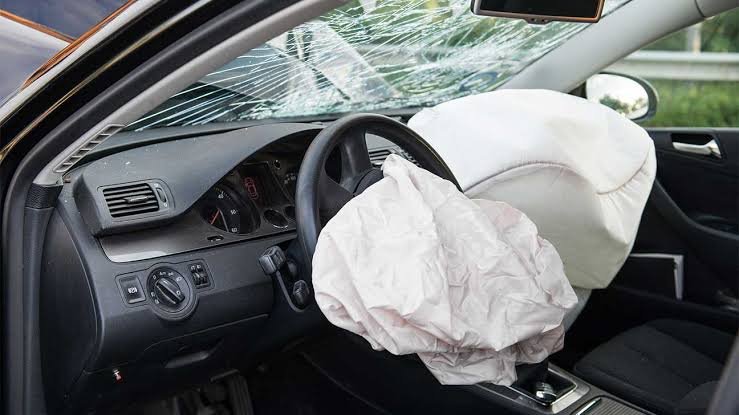
When your car’s airbags deploy during an accident, it can be a frightening experience. Even if you and your passengers feel fine and the vehicle still starts, you may wonder whether it is safe to continue driving.
Airbag deployment usually indicates that the vehicle has experienced an impact significant enough to activate its safety system. However, the damage may extend beyond the airbags themselves. Your steering, suspension, brakes or other components may also have been affected.
For Calgary drivers, knowing what to do after an airbag deployment is important, particularly if the accident happens on a busy road or during winter.
In this guide, we’ll explain what happens when airbags deploy, whether you can drive afterwards, how to arrange towing and what to consider before sending your vehicle to a repair shop.
Quick Checklist: What to Do When Your Airbags Deploy
If your airbags deploy after an accident, follow these steps:
- Check for injuries: Make sure you and your passengers are safe. Call emergency services if anyone is injured or in immediate danger.
- Switch off the engine: If it is safe to do so, turn off the vehicle.
- Turn on your hazard lights: Make your vehicle visible to approaching traffic.
- Move to safety: If the vehicle is in a dangerous location, follow emergency responders’ instructions.
- Avoid driving the damaged vehicle: Airbag deployment can be accompanied by hidden mechanical damage.
- Contact your insurance company: Ask about accident reporting and towing coverage.
- Arrange professional towing: Transport the vehicle to a suitable repair facility for inspection.
Your safety should always come before recovering the vehicle.
1. Why Do Car Airbags Deploy?
Airbags are designed to protect occupants during certain types of collisions. They work alongside seat belts to help reduce the risk of serious injuries.
Modern vehicles use sensors to detect certain impacts. When the system determines that deployment is necessary, it activates the appropriate airbags.
Depending on the vehicle and the type of collision, the airbags may deploy from different locations, including:
- The steering wheel
- The dashboard
- The sides of the vehicle
- The roof area
- The front seatbacks
Not every accident causes airbags to deploy. The decision depends on factors such as the direction and severity of the impact, the vehicle’s design and the airbag system’s programming.
If your airbags deploy, the vehicle should be inspected before it returns to normal use.
2. Can You Drive a Car After the Airbags Have Deployed?
You should not drive a vehicle after its airbags have deployed until it has been professionally inspected and repaired as necessary.
Even if the engine starts and the vehicle appears to function normally, important safety systems may no longer work correctly.
There are several reasons to avoid driving.
Your Airbag System May No Longer Protect You
Deployed airbags are single-use safety devices. Once they have inflated, they cannot protect you again in another collision.
The vehicle may also have damage to its airbag sensors, control module or other safety components.
Your Steering or Suspension May Be Damaged
An impact strong enough to trigger an airbag can also damage the steering or suspension.
You may not notice the damage immediately, particularly if the vehicle still moves.
Driving with damaged steering or suspension components can make the vehicle difficult to control.
Your Brakes May Have Been Affected
A collision can damage brake lines, callipers, wheels or other components.
If the brakes are not working correctly, driving the vehicle can be dangerous.
The Airbags May Obstruct Your View
A deployed airbag can remain partly in front of the steering wheel or dashboard.
This may interfere with your visibility and ability to control the vehicle.
For these reasons, arrange professional inspection and towing rather than attempting to drive home.
3. What Happens to Your Car When the Airbags Deploy?
Airbag deployment is only one part of the damage assessment after an accident.
A mechanic or qualified collision repair technician may need to inspect several systems.
Airbags and Safety Components
The deployed airbags and related components must be assessed and replaced or repaired as required by the manufacturer.
The inspection may include the airbag control module, crash sensors, wiring and seat belt pretensioners.
Steering and Suspension
The impact may have affected the wheels, steering components or suspension.
A technician will need to check whether the vehicle can steer correctly and whether any parts are bent or damaged.
Body Structure
The vehicle’s body may have sustained damage that is not immediately obvious.
A collision repair specialist can assess whether the vehicle’s structure has been affected and determine what repairs are required.
Electrical Systems
Modern vehicles rely on electronic systems to manage safety features and other functions.
An accident can damage wiring, sensors or control modules. These components may require diagnostic testing.
The extent of the damage will determine whether the vehicle can be repaired economically and safely.
4. What Should You Do Immediately After Airbag Deployment?
The moments following an accident can be confusing. Having a clear plan can help you respond safely.
Step 1: Check Everyone for Injuries
Check yourself and your passengers. If anyone is injured, trapped or in immediate danger, contact emergency services.
Do not move an injured person unless there is an immediate threat, such as fire.
Step 2: Turn on Your Hazard Lights
If your vehicle’s electrical system is functioning, switch on your hazard lights to alert other road users.
If the vehicle is stopped in a dangerous position, follow the instructions of emergency responders.
Step 3: Switch Off the Engine
If it is safe to do so, switch off the engine. If you notice smoke, a fuel leak or signs of fire, move away from the vehicle and seek emergency assistance.
Avoid touching damaged electrical components.
Step 4: Move to a Safe Location
If the vehicle is in a dangerous position, prioritise personal safety.
Do not stand in an active traffic lane or attempt to inspect the vehicle while exposed to moving traffic.
If you are unsure whether it is safe to leave the vehicle, follow emergency responders’ instructions.
Step 5: Arrange Vehicle Recovery
Once everyone is safe and emergency needs have been addressed, contact your insurer or a towing company to arrange vehicle recovery.
Explain that the airbags have deployed and describe any visible damage.
5. Does Airbag Deployment Mean Your Car Is a Write-Off?
Not necessarily.
A vehicle with deployed airbags can sometimes be repaired. Whether it is considered a total loss depends on several factors, including:
- The extent of the collision damage
- The cost of replacing airbags and other components
- The vehicle’s market value
- The condition of the vehicle before the accident
- The insurer’s assessment and applicable rules
A vehicle may be repairable even if several airbags have deployed. However, the cost of restoring its safety systems and repairing structural damage can be substantial.
Your insurance company can explain how it will assess the damage and determine whether the vehicle is repairable or a total loss.
6. What Is the Best Way to Tow a Car After Airbag Deployment?
The correct towing method depends on the vehicle’s condition, drivetrain and the extent of the damage.
Flatbed Towing
Flatbed towing is often suitable for vehicles involved in accidents, especially when airbags have deployed.
The entire vehicle is loaded onto a platform, keeping all four wheels off the road during transport.
This can help avoid additional stress on damaged wheels, suspension or drivetrain components.
However, loading a heavily damaged vehicle may require specialised equipment and careful handling.
Wheel-Lift Towing
Wheel-lift towing raises one end of the vehicle while the other remains on the road.
It may be suitable in certain situations, but the operator must consider the vehicle’s drivetrain and any damage to its wheels or suspension.
If the vehicle has significant collision damage, a different recovery method may be necessary.
Specialised Accident Recovery
Some accident-damaged vehicles cannot be moved using ordinary towing equipment.
For example, a vehicle with severely damaged wheels, locked steering or an unstable position may require specialised recovery equipment.
The towing operator should assess the vehicle before attempting to move it.
7. What If Your Car Is Blocking Traffic After an Accident?
If your vehicle is blocking a road after an accident, safety should be your first concern.
If anyone is injured or there is an immediate hazard, contact emergency services.
Do not attempt to move a badly damaged vehicle if doing so could cause further injury or damage.
If the vehicle can be moved safely and emergency responders permit it, follow their instructions.
Once the scene is safe, arrange towing if the vehicle cannot be driven.
When contacting a towing company, explain whether the vehicle is blocking traffic, whether its wheels are damaged and whether it can roll.
8. What If Your Airbags Deploy During a Calgary Winter?
Winter accidents can create additional challenges for drivers in Calgary.
Snow, ice and reduced visibility can make it difficult to stop safely or assess damage after a collision.
If your airbags deploy during winter:
- Check for injuries and call emergency services if necessary.
- Turn on your hazard lights if they are working.
- Avoid standing close to moving traffic.
- Follow emergency responders’ instructions.
- Tell the towing operator if your vehicle is stuck in snow.
- Mention any damaged wheels or steering components.
If the vehicle cannot be moved safely, arrange professional recovery.
You can also read our guide to Calgary winter towing and snow recovery for additional advice about vehicle recovery in difficult winter conditions.
9. Will Insurance Cover Towing After Airbag Deployment?
Your insurance policy may cover towing after an accident, but the details depend on your coverage and circumstances.
Some policies include towing as part of collision coverage or roadside assistance. Others may have specific limits or conditions.
Before arranging towing, contact your insurance company if it is safe and practical to do so.
Ask about:
- Whether accident towing is covered
- Any limits on towing costs
- Approved towing providers
- The repair facilities you can choose
- Whether additional recovery charges are covered
Keep any receipts and relevant documentation for your insurance claim.
10. How Much Does Towing Cost After Airbag Deployment?
The cost of towing a vehicle after an accident varies depending on the situation.
Factors that can affect the price include:
- The distance to the repair facility
- The vehicle’s size and weight
- The extent of the damage
- Whether the wheels can roll
- Whether specialised recovery equipment is required
- The vehicle’s location
A straightforward tow may cost less than a complicated recovery involving severe damage or difficult access.
Ask the towing company for a quote and explain that the airbags have deployed. This helps the operator understand the type of recovery that may be required.
You can also consult our guide to tow truck costs in Calgary for more information.
11. When Should You Call ARM Towing?
If your vehicle has been involved in an accident and its airbags have deployed, you may need professional towing to transport it to a repair facility.
When contacting ARM Towing, provide the following information:
- Your exact location in Calgary
- Your vehicle’s make and model
- Whether the airbags have deployed
- Whether the vehicle can move
- Whether any wheels or suspension components appear damaged
- Your preferred destination, if known
Explain whether the vehicle is blocking traffic or located somewhere difficult to access.
This information can help the towing operator assess the situation and determine the appropriate recovery method.
If anyone is injured or the accident presents an immediate danger, contact emergency services first.
Frequently Asked Questions
Can I drive my car if the airbags have deployed?
You should not drive a vehicle after airbag deployment until it has been professionally inspected and repaired as necessary. The collision may have damaged other important systems, including the steering, suspension and brakes.
Does airbag deployment mean my car is badly damaged?
Airbag deployment indicates that the vehicle experienced an impact that triggered its safety system. However, the extent of the damage varies. A professional inspection is needed to determine whether the vehicle can be repaired.
Do I need a flatbed tow truck after an accident?
A flatbed is often suitable for accident-damaged vehicles, particularly when the wheels or drivetrain may be affected. However, the correct method depends on the vehicle’s condition and the damage.
Can airbags deploy without a serious accident?
Airbag deployment depends on the vehicle’s sensors, impact characteristics and system design. Not every collision causes deployment, and the presence of deployed airbags alone does not establish the full extent of vehicle damage.
Can a car be repaired after its airbags deploy?
Yes, some vehicles can be repaired after airbag deployment. The repair process may involve replacing airbags and inspecting other safety components. Whether repairs are worthwhile depends on the vehicle’s condition and repair costs.
Should I contact my insurance company before towing?
If it is safe and practical, contact your insurer to check your towing coverage and any requirements. If the vehicle is creating an immediate hazard, prioritise safety and emergency assistance.
Can ARM Towing tow a car after airbag deployment in Calgary?
You can contact ARM Towing to arrange towing assistance for a vehicle involved in an accident. Explain that the airbags have deployed and provide details about any visible damage so the appropriate recovery method can be assessed.
Final Thoughts
Airbag deployment can be a stressful experience, but knowing what to do afterwards can help you manage the situation.
Check for injuries, move to safety and avoid driving the vehicle until it has been professionally inspected. Even if your car appears to be working normally, hidden damage may make it unsafe.
Once the scene is safe, arrange suitable towing and have the vehicle assessed by a qualified repair professional.
For Calgary drivers, understanding the recovery process can make dealing with an accident easier and help prevent additional damage to an already affected vehicle.

Moussa El Haddaoui is a digital content creator, web developer, and SEO specialist with a background in English Studies. He writes engaging, informative content and builds websites focused on user experience, search visibility, and quality. His interests include web development, AI automation, digital marketing, and creating useful online experiences.